Category: Family

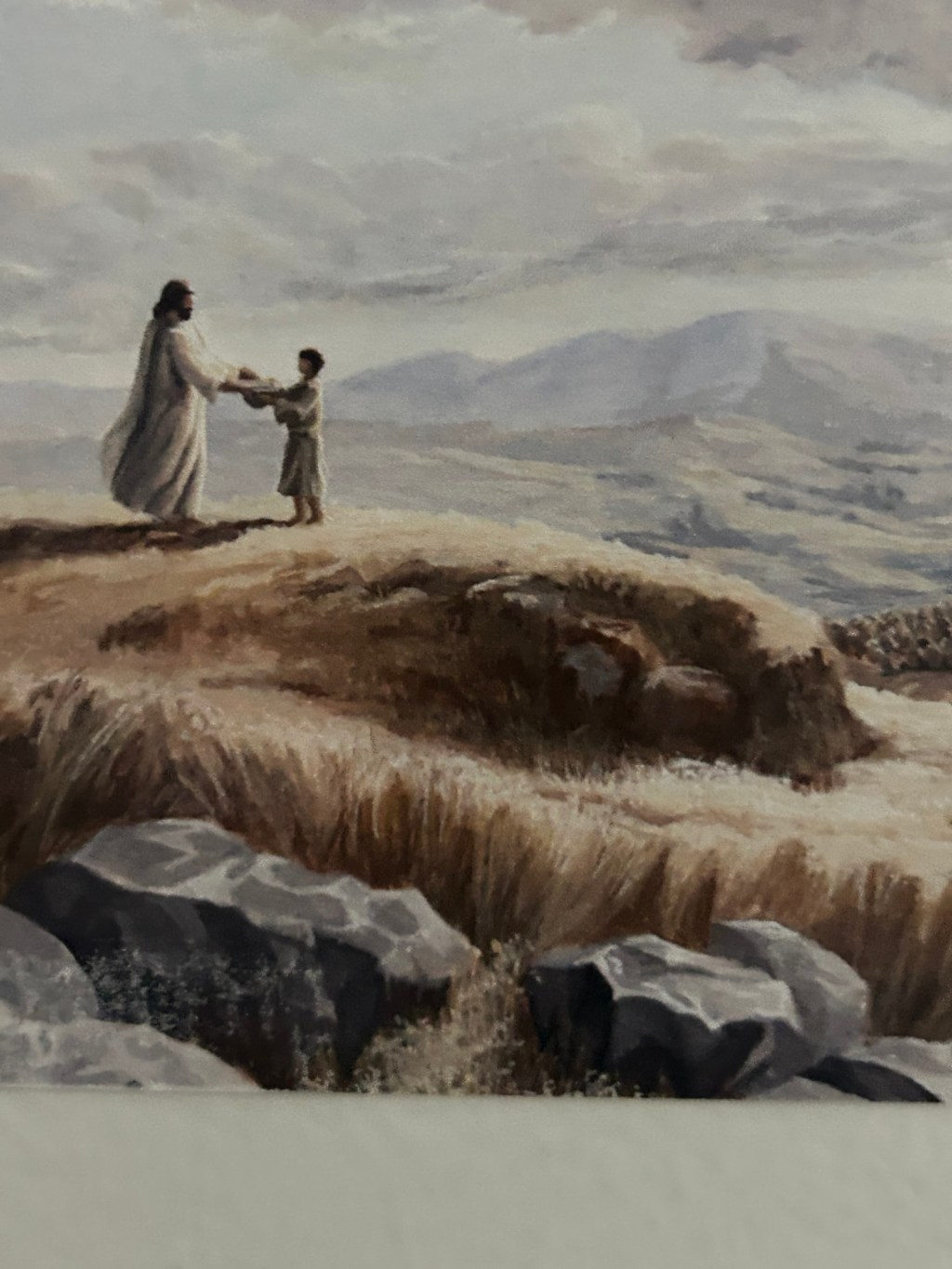
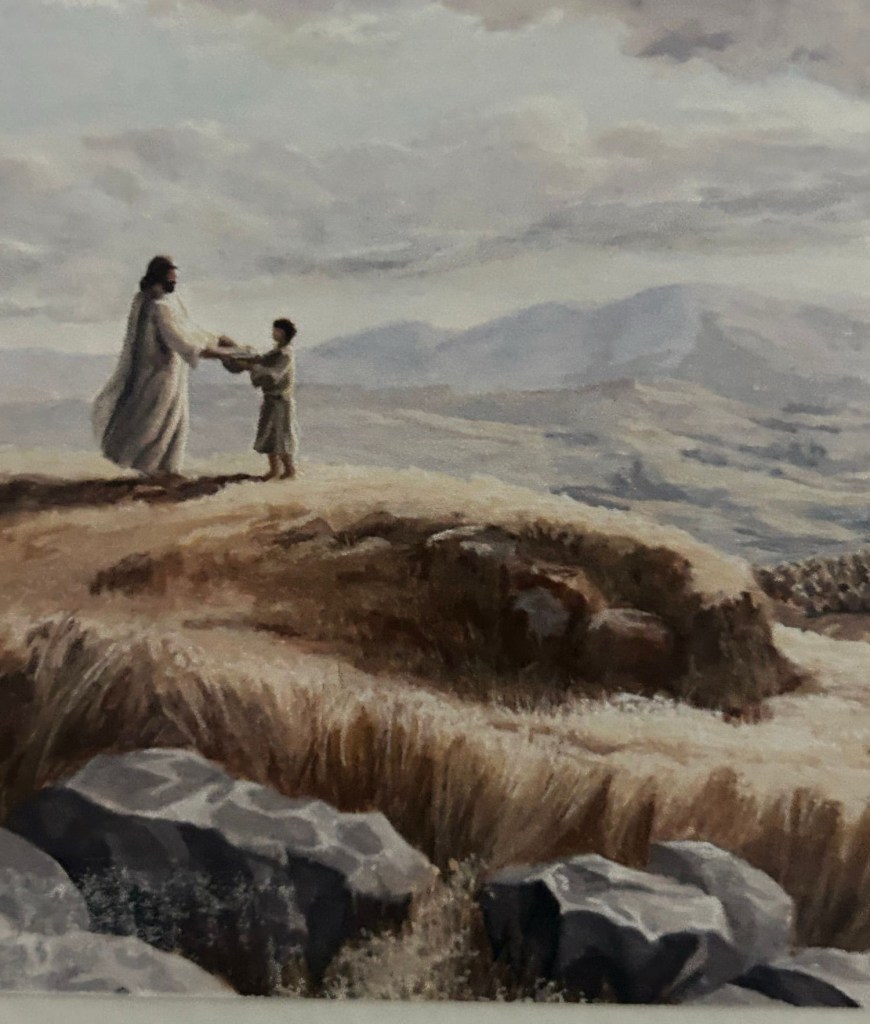
  • God Is Good at Being God

    “Who is a God like you, who pardons sin and forgives the transgression of the remnant of his inheritance? You do not stay angry forever but delight to show mercy.” — Micah 7:18 (NIV)

    Who is God?

    This question started haunting me toward the end of 2025, as I was preparing to close one year and begin another. I was looking through my Bible, thinking about what I wanted to study next, trying to decide which book of the Bible I should read or what book I should pick up to accompany my time in the Word. And for some reason, the same question kept coming back to me: Who is God?

    Now, you have to understand why this question was so strange to me. I know God! I’ve walked with the Lord for years, and I have a very real, vibrant, walk-by-my-side relationship with Him. I experience Him so personally when I read my Bible. There are moments when I can almost hear His voice through His Word, and when I pray, I can feel the Spirit guiding me in prayer. So it wasn’t that I was suddenly questioning whether I knew God or whether He was real. It was more like this question had been planted in my spirit, and I couldn’t quite shake it. Who is God? Not what does He want me to do? Not what does He have planned for my life? But who is He?

    And the more I thought about it, the more I realized that although I had spent years studying the Bible, so much of my reading had been directed toward things I wanted to learn for my own life. How to be a better mother, how to grow spiritually, how to navigate relationships, how to serve Him better. And there’s nothing wrong with any of those things. But I began to feel this tremendous pull toward studying God Himself. I wanted to know His nature, His character, His attributes. I wanted to understand who He is, even apart from the things He does for me.

    So, for the first time, I decided to dedicate the majority of my reading to that one pursuit. I read books like Mere Christianity by C. S. Lewis and The Knowledge of the Holy by A. W. Tozer. I also included Jen Wilkin’s None Like Him and In His Image in my devotional reading. And I found myself genuinely excited about all of it.

    I remember asking the Lord, “Where can I find You in the Bible? I mean, I know You’re everywhere, but where should I go to learn about You?” And I felt drawn to Deuteronomy, which became such a beautiful place to study the heart of God. I wanted to see how a God like Him would establish a nation, what He considered important, what He commanded, what He loved, and what His dealings with His people revealed about His character. I also spent time in Matthew and Mark, getting to know Jesus through the Gospels, and in Revelation and Job. I wasn’t reading simply to finish another book of the Bible. I was on a quest to answer this question: Who is God?

    And somewhere along the way, I discovered something that I don’t think I was expecting at all. The more I learned about who God is, the more I began to understand who I am not.

    I am not God.

    I know, I know. Quite the revelation, right? Haha! But stay with me, because this was genuinely one of the most humbling and freeing realizations of my life.

    As I studied God’s attributes, I learned about what theologians call His communicable and incommunicable attributes. Fancy words, I know! They even made me feel like a little theologian for a moment. Haha! But the more I learned about the attributes that belong to God alone, the more I was confronted with how much of the turmoil in my own life came from trying to possess them. My judgment of others came from trying to be omniscient, as though I could know their hearts. My exhaustion came from trying to be omnipresent, as though I could be everywhere for everyone. My struggle with my limitations came from wanting to be self-sufficient, needing nothing and no one. And my fear of change came from longing for immutability, wanting circumstances to remain the same when only God is unchanging.

    I realized how easily I could dishonor God’s character by attempting to sit on His throne. Not intentionally, of course. I wasn’t walking around thinking I could do a better job than God! But sometimes I was behaving as though everything depended on my abilities to do things that only He could.

    We are called to reflect His character, not assume His responsibilities.

    And while that realization was humbling, it was also incredibly freeing. Because yes, I am not God, but He is. And goodness, He is so good at being God.

    That’s something I kept thinking throughout my reading. God is so good at being God! He knows when to forgive and when to correct. He knows the right time for everything. He is perfectly merciful and perfectly just. He knows what I cannot know, sees what I cannot see, and understands things I will probably never understand on this side of eternity. And the more I studied Him, the more I found myself resting in His sovereignty.

    This morning, as I was reading Micah 7, I came across that beautiful question: “Who is a God like you?” And I smiled because here I was, after spending so much of this year asking who God is, reading a prophet who was marveling at the very same thing. Micah had been describing the unfaithfulness of God’s people, the corruption around him, and the difficulty of finding those who were righteous. And yet, when he turns his attention to God, he speaks of His compassion, His mercy, and His faithfulness to the promises He made.

    I love that because people change, circumstances change, nations rise and fall, and generations come and go, but God remains faithful. He doesn’t exist within the limitations of time the way we do. Tomorrow is not a mystery to Him. And when I read about His mercy, His wisdom, and His faithfulness, I am reminded again that there is no one like Him.

    I think that’s why I would encourage everyone, at least once in their lifetime, to go on this kind of quest: study the character of God. And if theology sounds boring to you, I promise there are some wonderful books that make it approachable. You don’t have to become a theologian to fall in love with learning about God.

    Because, friend, I think we are living in a time when the world is constantly asking us to become our own gods. We are told that we hold our future, that the answers are within ourselves, and that we can control our destiny. And I wonder how much of our exhaustion comes from carrying a weight that was never meant for us to carry.

    God calls us to be like Him in character, but He never calls us to become Him.

    So if you find yourself in turmoil today, if your responsibilities feel bigger than you, or perhaps you feel like what you’re doing is small and insignificant, I want to invite you to lift up your eyes. Spend some time getting to know the God who created you. Let His greatness, His wisdom, and His sovereign authority overwhelm your heart.

    I think that’s what the psalmist was doing when he wrote:

    “I lift up my eyes to the mountains—where does my help come from? My help comes from the LORD, the Maker of heaven and earth.” — Psalm 121:1–2

    What a wonderful thing it is to know where our help comes from. And even more wonderful to remember that it certainly doesn’t come from our ability to have everything figured out. Ha!

    God is so very good at being God. Trust Him today.
  • Do Not Despise the Small Beginnings

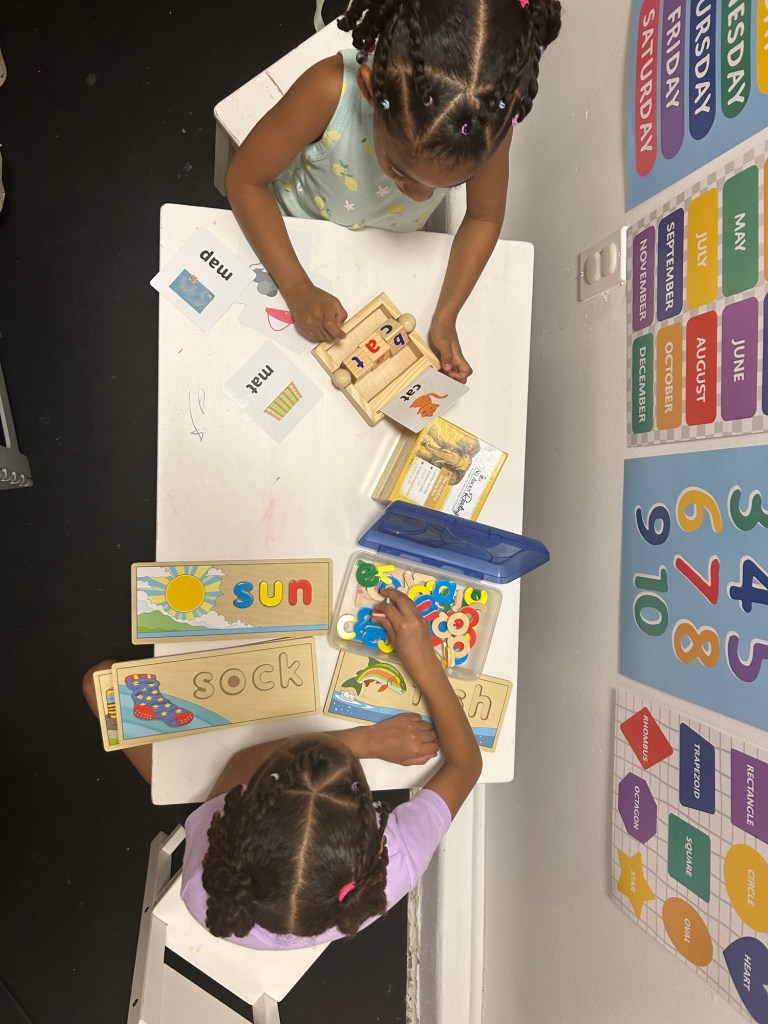
    I’ve been thinking a lot lately about how much of life is built in really small moments. I think homeschooling has made me notice this more because so much of what I do with my girls every day can feel incredibly small. We practice one vowel, one sound, one number. Sometimes we go over the same thing so many times that I wonder if it is even sticking. Then one random day, they know it. Something that felt like it wasn’t going anywhere was actually building the entire time.

    I think our lives with God are a lot like that.

    We love the big moments. We love the answered prayer, the breakthrough, the opportunity we prayed for, the moment when we can finally look back and say, “Wow, look what God did.” But lately I’ve been wondering how many of those moments started with something so small that we almost didn’t think it mattered.

    A few weeks ago, I was thinking about some of the sweetest things God has brought into my life and how ordinary some of their beginnings were. A conversation. Showing up somewhere. Sending a text. Saying yes to something I could have easily said no to. There was no way for me to know at the time what those little decisions would become.

    Zechariah 4:10 says, “Do not despise these small beginnings, for the Lord rejoices to see the work begin.”

    I love the wording of that verse because it doesn’t say that the Lord only rejoices when the work is finished. He rejoices to see it begin.

    I think sometimes I’m so focused on what I’m asking God to do that I overlook what He has already put in front of me to do. I want to know where something is going before I give myself fully to the beginning. I want to see the fruit while God is asking me to be faithful with a seed.

    But a lot of our lives are lived in the seed part.

    It’s reading your Bible this morning even if you don’t have some incredible revelation afterward. It’s praying again for the thing you have prayed about a hundred times. It’s reaching out to the person God keeps putting on your heart. It’s going for the walk, making the meal, sitting down with your child, working on the idea, having the conversation, or simply doing the next thing you know you’re supposed to do.

    None of those things feel particularly impressive while you’re doing them. That’s probably why they can be so easy to dismiss.

    But when I think about my girls learning to read, I know I would never look at one little vowel lesson and say it doesn’t matter simply because they can’t read a whole book yet. This is how they learn to read. The tiny lesson isn’t separate from the bigger goal. It is part of how we get there.

    Maybe there are things in my own life that I need to see the same way.

    Maybe I don’t need to know what this small act of obedience will become. Maybe I just need to be faithful with it today and trust that God sees the whole thing while I can only see this little piece.

    So that’s my prayer this week: Lord, help me pay attention to the small things. Help me not become so consumed with what I’m waiting for that I miss what You’re doing right now. And when You put something small in front of me, give me the faith to believe that small does not mean insignificant.

    Sometimes it’s just a vowel.

    But then one day, they’re reading.

  • Your Obedience Is Not Only for You

    “For we have heard how the LORD dried up the water of the Red Sea for you when you came out of Egypt… And as soon as we heard it, our hearts melted… for the LORD your God, he is God in the heavens above and on the earth beneath.”
    Joshua 2:10–11

    Would you believe me if I told you these words were spoken by a prostitute?

    Her name was Rahab, and if I am quite honest with you, I see a little bit of myself in her. Rahab was not an Israelite. She didn’t grow up among the people of God or experience the miracles Israel had experienced. She was a woman living in Jericho who had simply heard about what the God of Israel had done—and she believed.

    Maybe that’s one of the reasons I love her story so much. I didn’t grow up in church either. There wasn’t a long history of Christianity passed down to me. Somewhere along the way, I heard about Jesus, I believed that what I was hearing was true, and that belief changed the direction of my life. And in some ways, isn’t there a little Rahab in all of us? We heard the good news about a God we could not see, we believed, and our lives changed because of it.

    Hebrews 11:31 remembers Rahab as a woman of faith, and James 2:25 points to her as an example of faith that produced action. She heard, she believed, and then she acted according to what she believed. But there is another part of her story that has been sitting with me lately.

    When the spies arrived in Jericho, Rahab told them that her people had already heard about their God. She even mentioned the Red Sea, an event that had happened decades before. Israel had spent forty years wandering in the wilderness before Joshua finally led the next generation toward the land God had promised them. We don’t know when Rahab first heard these stories or how long she had personally been thinking about the God of Israel, but we know this: God’s reputation had arrived in Jericho before His people did.

    And it makes me wonder about all the people who can be sitting on the other side of our obedience that we know absolutely nothing about.

    When Rahab hid the spies, she asked them not only to save her, but to save her family. Eventually, a scarlet cord hung from her window, and when Israel entered Jericho, Joshua 6 tells us that Rahab and her family were spared. This woman who had only heard about God became part of His people. Even more beautifully, Matthew 1:5 later gives us her name in the genealogy of Jesus Christ.

    Her obedience was not only for her.

    And this is where her story becomes very personal for me.

    My father-in-law has spent years faithfully walking with God. He is a man of prayer, the kind of man who would wake up early in the morning to pray for his family and pray over his children at night. One of the things he emphasized strongly while raising his children was sexual purity and devotion to the Lord. At the time, that obedience probably looked like something he was simply responsible for teaching his own children.

    But one of those children eventually became my husband.

    Ira carried those convictions into our marriage, and I came from a very different family story. Divorce and sexual sin had affected generations of my family, and I had not inherited the same example he had. Yet something God had taught my father-in-law, and something he faithfully passed down to his son, eventually became a gift to me too. It entered our marriage, it entered the home we built together, and now it is entering the lives of our daughters.

    And somehow, it traveled even further. My younger brother lived with us for five years, and in many ways we helped raise him. He watched those same values lived out in our home, and today it is beautiful to me to see how strongly he carries some of those convictions himself. My father-in-law’s obedience reached a young man from an entirely different family who wasn’t even born when some of those seeds were first being planted.

    That is what I want you to remember today.

    If God is asking you to obey Him in an area of your life, you may only be able to see what that obedience means for you right now. You see what you need to surrender, the boundary you need to establish, the habit you need to change, or the step of faith you need to take. But you cannot see all the people who may one day live in the blessing of the obedience you are choosing today.

    There may be a Rahab somewhere on the other side of your yes.

    We talk often about how our disobedience can affect other people, and that is true. But sometimes we forget the beautiful opposite truth: our obedience affects people too. Someone may learn to pray because you prayed. Your children may inherit a conviction you fought hard to establish. Someone who joins your family years from now may receive the fruit of a decision you are making with God today.

    You may never know how far your obedience will travel. So obey Him anyway—not because you can see everyone who will benefit from it, but because you trust the God who can.

    Your obedience may begin with you, but by the grace of God, it does not have to end with you.

  • When Doing More Means Stewarding Less

    When Doing More Means Stewarding Less

    Have you ever had one of those weeks where you absolutely killed it? You were on top of everything. Productive. Disciplined. Showing up. Things were running so well that somewhere along the way you became a superhero in your own mind and thought, Well, apparently I can do even more.

    And then you overbooked yourself.

    Maybe this does not happen to you, but unfortunately, this is a talent of mine.

    Recently, I got to Friday completely burned out after a week of overriding every signal that I needed to slow down. I found myself crying to Jesus, saying, “I did it again. What am I doing wrong? How do I keep ending up here?” And, of course, the enemy was quick to jump in with the extremes: See? You cannot handle anything. You should not do anything. He loves extremes, but that is a topic for another day.

    As I started tracing the week backward, I could see exactly what happened. One thing led to another. I said yes to this person, yes to that thing, yes to another opportunity, all during one of those high-on-coffee, I’m amazing, I’m on top of the world moments. A.K.A. pride.

    Not necessarily the loud kind of pride that says, I am better than everybody else. Mine was subtler. It was the sweetness of being needed. The feeling that I could help. That I knew something useful. That maybe I was the person who needed to show up. And honestly, I genuinely wanted to serve people. I wanted to help. Every one of those things felt important at the time.

    But dedication does not erase human limitations.

    As I prayed about it, Scripture brought me back to none other than Peter. Peter, Peter, Peter. You and I, boy, we go way back. Sometimes I read about Peter and think, Sir, unfortunately, I understand you completely. You are my twin brother.

    Peter had a tendency to overestimate himself. “Even if everyone else falls away, I won’t.” “I will never deny You.” “I will lay down my life for You.” Peter did not lack passion. That was never his problem. His love for Jesus was real. But his confidence in his own strength was greater than his understanding of himself.

    And that hit me.

    But here is the good news: Jesus did not cure Peter’s overconfidence by convincing him that he was useless. He did not say, “See, Peter? This is why you should stop trying to help anyone. Go home, mind your business, and never volunteer again.” Instead, after Peter’s failure, Jesus restored him. He asked him, “Do you love Me?” and then told him, “Feed My sheep.”

    For someone who had already overestimated what he could carry, you might expect Jesus to tell him to do less. Instead, Jesus still gave him something to do. But those two little words hit me: My sheep.

    Not Peter’s sheep. Jesus’ sheep.

    Peter could feed them. He could serve them. He could love them. He could teach them. But he was never their Savior. And neither am I.

    That exposed something in me. I had started treating things as though every need that reached my hands automatically became my responsibility. If I could help, I should. If I knew something, I should say it. If someone needed support and I had an open space on my calendar, obviously that space could be given away.

    Except that space was not actually empty. It was the margin making my life work.

    That was the part I had missed.

    The time I considered “extra” was the time I needed to grocery shop, clean my house, sit down with my husband and look at our finances, run errands, prepare for homeschool, take care of my body, sleep, enjoy my family, and let my soul settle after busy days.

    I was treating maintenance like leftover time.

    But maintenance is stewardship.

    The margin was not proof that I had room for more. The margin was part of the reason I was doing so well in the first place. You cannot remove the thing making your life sustainable and then expect your life to remain sustainable.

    So this has become a new guardrail for me: rest and maintenance are not negotiable spaces on my calendar. They are not the blank squares where Superhero Emely gets to squeeze in three more people.

    Jesus Himself recognized the need for rest. In Mark 6, when His disciples had been serving so much that they did not even have time to eat, He told them to come away with Him and rest. Apparently even kingdom work did not eliminate our need to stop.

    And maintenance matters too. Budgets matter. Groceries matter. Chores matter. Sleep matters. Preparing the home matters. Caring for our bodies matters. Those things may not feel as spiritually exciting as helping someone through a crisis or sitting across from someone with an open Bible, but they are important pillars underneath the ministries, families, and God-given callings we are trying to carry.

    Psalm 90:12 says, “Teach us to number our days, that we may gain a heart of wisdom.” I love that wording: number our days. I do not have all the days and hours that the imaginary version of myself thinks she has. Wisdom helps me make decisions for the life God has actually given me, not the superhero version of myself I occasionally become in my own mind.

    And a few verses later comes another prayer: “Establish the work of our hands.” Teach me to number my days, and then establish the work You have actually placed in my hands.

    That has changed my prayer life too. Saying no does not mean I stop caring. I can care deeply and still hand something back to God. I can pray, “Lord, I care about this. Is this mine? And if it is not, send whoever You have for it.”

    Maybe that is part of what I had forgotten about feeding sheep. Feeding them is not only the beautiful moment of pouring into them. There is pasture to tend. There is quiet labor that supports the visible calling.

    I do not get to enjoy only the glorious parts of what God has called me to while neglecting the quiet work that keeps it healthy. The rest, the preparation, the home, the finances, the ordinary maintenance—all of it helps me tend the pasture.

    So perhaps faithfulness is not fitting as much good as possible into my days. Perhaps it is asking God for the wisdom to number them well, to establish the work He has placed in my hands, and to teach me to tend my pasture faithfully.

  • When “Enough” Doesn’t Feel Like Enough

    When “Enough” Doesn’t Feel Like Enough

    There was a season when we were living in the Dominican Republic as missionaries where life looked very different from the life I had been used to in the United States. We had less convenience, less access, and less of the things I had grown accustomed to reaching for without even thinking about them. Somewhere in that simplicity, I started noticing something uncomfortable about myself: sometimes I wasn’t struggling because I didn’t have enough. I was struggling because enough didn’t feel like enough anymore.

    That realization has followed me into motherhood, homemaking, finances, friendships, dreams, and even the way I look at myself. There is always something else we could convince ourselves we need: a bigger house, a better routine, more money, more patience, more opportunities for our children, a different body, a more organized home, or a more exciting life. The list never really ends, because once our hearts learn to measure life by what is missing, there will always be something else to find.

    It makes me think about the beginning. Before Genesis 3, there was Genesis 2. There was abundance, provision, relationship, purpose, and most importantly, there was God. Creation was whole and complete before sin entered the story. Then the serpent came into the garden and somehow managed to convince Eve to turn her attention away from everything she had been given and toward the one thing she did not have.

    I find that fascinating because Eve was standing in abundance while being persuaded to feel deprived. Sometimes I wonder how often the enemy still uses the same strategy with us. Maybe he doesn’t have to convince us that God has given us nothing. Maybe he only has to keep pointing toward the one thing that appears to be missing until it becomes bigger in our minds than everything God has already placed around us.

    That voice can sound different depending on the season. It might tell us to look at what another woman has, what our children do not have, how far behind we feel, what is wrong with our house, what could be better in our marriage, what our bank account cannot afford, or what we wish were different about our bodies. Little by little, we can find ourselves standing in the middle of answered prayers while still feeling empty.

    Motherhood has especially exposed this in me. There will always be another activity I could sign my children up for, another curriculum I could buy, another experience I could give them, another part of our home I could improve, or another way I could imagine becoming a better mother. None of those desires are necessarily wrong, but I have had to learn to stop sometimes and ask myself whether something is truly missing or whether I have simply stopped seeing what God has already provided.

    I also have to ask whether I am bringing a genuine need before God or asking Him to satisfy an appetite that the world keeps feeding. There is nothing wrong with wanting beautiful things, dreaming, building, improving, traveling, providing for our families, or asking God for more. Scripture does not teach us to become people without desires. Jesus Himself tells us in Matthew 7:7, “Ask, and it will be given to you; seek, and you will find; knock, and the door will be opened to you.”

    But asking God for more and believing that I cannot be content until I receive more are two very different things. Contentment does not mean that I stop dreaming. It means that my dreams are no longer responsible for sustaining me. It means that I can pray for tomorrow while still receiving today as a gift.

    Psalm 23:1 says, “The Lord is my shepherd; I shall not want.” I have read that verse many times, but I think there is something deeply protective about those words in a world that constantly tells us that we are missing something. The Lord is my Shepherd, not my income, my possessions, my children’s accomplishments, my appearance, other people’s approval, or the version of my life that I keep imagining somewhere in the future.

    If the Lord is my Shepherd, then I can trust that He knows what I need. Sometimes His provision looks like giving me more, and sometimes His provision looks like teaching me that I already have enough. Sometimes the abundance is not found in receiving something new at all, but in finally having eyes to recognize what has been sitting in front of me the whole time.

    I want to become better at noticing those things: the food on the table, the children making noise in my house, the people who love me, the work God has entrusted to me, the prayers He has already answered, and the ordinary moments that were once things I prayed for. I still have dreams. I still have prayers. I still have places where I am asking God for more. But I do not want the desire for what is next to steal my ability to worship Him for what is now.

    A Prayer for the Weary Heart

    Lord, quiet my anxious heart. When the world tells me that what I have is not enough, remind me of Your faithfulness and open my eyes to see Your abundance instead of my lack. Teach me to recognize the difference between a desire You have placed inside of me and an appetite the world keeps feeding.

    Help me live as a mother, wife, daughter, and woman who is not constantly trying to become worthy, complete, or full, but as someone who knows she is already loved and being formed by You. Give me gratitude for today while I continue trusting You with tomorrow. You are my Shepherd, and You are enough.

    Amen.

  • This Is My Jar

    This Is My Jar

    This morning, I was lying in bed feeling defeated. My girls have been sick with a mouth virus for what feels like forever, I haven’t been feeling well myself, and although the house is finally clean, my mind could still produce an endless list of things I could be doing. There are drawers I could organize, plans I could make, work I could get ahead on, things around the house that would make our lives easier later. Instead, I was lying in bed, scrolling and comparing myself to everyone who seemed to be doing more with their day than I was.

    Eventually, I had to tell myself, Emely, stop. Stop judging your life. Stop comparing it to everyone else’s. This is your life. There will always be someone doing something I am not doing. Someone is working out today. Someone is building a business. Someone has a perfectly organized home. Someone has more energy, more discipline, more money, or simply a completely different capacity than I have in this season. None of that tells me anything about whether I am being faithful with the life God has actually given me.

    That thought stayed with me as I read Mark 14 and the story of the woman who came to Jesus carrying an alabaster jar of very expensive perfume. She broke the jar and poured the perfume over Jesus, and almost immediately, the people around her began evaluating her decision. “Why this waste of perfume?” they asked. They even had a perfectly reasonable alternative for what she could have done with it. The perfume could have been sold and the money given to the poor.

    What struck me this morning was how familiar that sounded. We are so quick to decide what should be done with someone else’s jar. And if no one around us is doing it, we are often perfectly capable of doing it to ourselves. We look at what God has placed in our hands and begin imagining all the other ways we could be using it. Maybe I should be accomplishing more. Maybe I should have more children by now. Maybe I should be further along financially. Maybe I should be more disciplined, more organized, more productive, more successful. Comparison gives us endless suggestions for what we should have done with our perfume.

    But Jesus did not join their criticism. He defended her. And then He said something I cannot stop thinking about: “She did what she could” (Mark 14:8).

    She did what she could. She was not responsible for doing what someone else could have done. She was not asked to carry someone else’s capacity, calling, resources, or assignment. She took what was hers and poured it before Jesus.

    This morning I felt the Lord reminding me, this is your jar. My life is my jar. My marriage, my children, my home, my work, the ministry opportunities He gives me, my gifts, my resources, my limitations, and even the amount of energy I have in a particular season are all part of what has been entrusted to me. I don’t have to spend my life wondering whether my perfume would have been more valuable if it had been poured somewhere else.

    One of the verses I have carried with me this year is Psalm 16:6: “The boundary lines have fallen for me in pleasant places; surely I have a delightful inheritance.” I keep returning to the idea of boundary lines. There is a portion of life that God has entrusted specifically to me. Accepting those boundaries does not mean that I stop growing, dreaming, working, or allowing God to stretch me. It simply means that I stop measuring faithfulness by somebody else’s portion.

    Maybe someone else’s perfume is being poured into a business right now. Maybe hers is being poured into six children. Maybe another woman is writing a book, building a ministry, caring for an aging parent, pursuing a degree, or working long hours to provide for her family. None of those lives diminish the value of another. The question is not, What is everybody else doing with their jar? The question is, Jesus, how do You want me to pour out mine?

    And sometimes the answer will look incredibly ordinary. Today, faithfulness may look like reading my Bible, holding sick children, making sure everyone has something to eat, and allowing my tired body to rest. Tomorrow it may look like recording, teaching, exercising, organizing, serving, creating, or building something God has placed on my heart. I don’t want to call one day meaningful and another wasted simply because one produced something the world can see.

    There is also something freeing about realizing that I do not need to have an opinion about everyone else’s jar. I can spend so much energy thinking about what someone else should change, how someone else should respond, or what someone else should be doing differently. But their perfume belongs to them. I have enough before the Lord in simply asking Him to continue sanctifying me and teaching me to faithfully steward what He has placed in my own hands.

    Perhaps that is part of what surrender looks like: opening our hands to the life God has actually given us instead of constantly negotiating for another one. Not abandoning dreams or pretending difficult seasons are easy, but trusting that even within these boundary lines there is a beautiful inheritance.

    I want to learn to look at my portion and say, Lord, this is my jar. It belongs to You. Teach me how to pour it out for You. And when comparison tries to convince me that what I have offered is too small, too ordinary, or should have been used differently, I want to remember the words Jesus spoke over that woman: “She did what she could.”

    What a beautiful thing it would be to reach the end of a season, or eventually the end of a life, and know that we did not do everything, we did not become everyone, and we did not fulfill every expectation placed upon us. We simply took what God placed in our hands and faithfully poured it at the feet of Jesus.

  • Trust and Obey: A Mom’s Invitation to Find Joy.

    There’s a hymn that often echoes in my mind: “Trust and obey, for there is no other way to be happy in Jesus than to trust and obey.” It’s simple. It’s profound. And as a mom, wife, and woman trying to balance all the demands of life, I’ve come to realize that trusting and obeying God is the secret to true happiness and peace.

    I’m from the Dominican Republic, a place I hold close to my heart. I’ve had the privilege of serving there in different ways—though never as an official missionary. My husband, who’s from Texas, has never set out to be a missionary either. Yet, God’s call on our lives recently became clear—so clear that we couldn’t ignore it.

    We love our life in Charlotte, North Carolina. It’s the place our children are growing up, the community we cherish. But when God begins to stir something in your heart—when He begins to whisper that there’s more, that He’s calling you to step out in faith—the comfort of what we know can feel so small compared to His plans.

    My husband felt a conviction that we couldn’t ignore. We began to pray, to seek His face, and to prepare our hearts for what’s ahead. The journey has not been easy—selling a house, figuring out the logistics, making provisions, and trusting God for the impossible. And as I sing lullabies to my girls during nap time, I find myself humming that familiar song: Trust and Obey. I was singing it over and over, remembering that obedience isn’t always easy, but it’s always worth it.

    One moment that touched my heart deeply was when I called my daughter to come get her hair done. She responded quickly and cheerfully, saying, “Trust and Obey, Mami! There is NO other way.” Her words surprised me because she spoke with such innocence and confidence. And I realized—obedience to God is really that simple. It’s trusting Him fully, even when we don’t understand everything.

    Dominican Republic May 2025

    Jesus Himself made the connection between obedience and joy. In John 15:10-11, He says:
    “If you keep my commands, you will remain in my love, just as I have kept my Father’s commands and remain in his love. I have told you this so that my joy may be in you and that your joy may be complete.”

    Obedience isn’t a burden—it’s an invitation into His love and joy. It’s the way we stay connected to Him, the way we experience the fullness of life He longs to give us.

    As moms and wives, we often carry so much weight. We juggle schedules, manage conflicts, care for little hearts, and try to keep everything running smoothly. But I’ve learned that many of our struggles with peace and confusion come from trying to handle everything in our own strength—instead of trusting God’s way.

    When I’m feeling overwhelmed or uncertain, I ask myself:
    What was the last thing God instructed me to do?
    When I last asked for clarity, what was His answer?
    Have I obeyed?

    Sometimes, the peace we long for is just a step of obedience—doing that one thing God has asked us to do, whether it’s forgiving someone, praying for guidance, or simply surrendering our need to control the outcome.

    Obedience is a powerful act of love—a way to show God that we trust His plans more than our own. It’s a form of worship, a declaration that we believe He is good and faithful.

    So today, I want to invite you, mama and wife, to reflect on this:
    What is God asking of you right now?
    Is there a step of obedience you’ve been hesitant to take? Maybe it’s forgiving, speaking truth in love, setting boundaries, or simply resting in His presence.

    Let’s choose to obey—not because we have to, but because we love Him. Obedience is our response to His unfailing love. It’s the evidence that we trust the One who calls us His friends.

    Today, I encourage you to see obedience not as a burden but as a gift—a way to draw closer to Jesus and experience His joy.

    Trust Him. Obey Him. And watch how He transforms your heart and your home.

    Because in Him, in trusting and obeying, we find true happiness—the kind that sustains us through every season of motherhood and marriage.

  • Hey there! Welcome to myhappyordinarylife!

    I’m Emely Galvez — a Dominican living in North Carolina, married to Iraah Jenkins, and mama to two beautiful girls, Farah Leah and Norah Sameen. As a stay-at-home mom, I’m all about finding joy in the everyday moments — the messy, the simple, the beautiful.

    (Our Fall Photos 2024 🥰)

    This space is where I share my journey of faith, family, and growth. I believe that living intentionally and being present helps us cherish the small things — whether that’s a quiet moment with a cup of coffee, a spontaneous dance party with my girls, or a heartfelt prayer before bed.

    Life isn’t about perfection; it’s about celebrating the small victories, the ordinary days, and the blessings all around us. My hope is that this little corner of the internet encourages you to do the same — to find happiness in life’s simple, everyday moments.

    Because of the Lord’s great love, we are not consumed, for his compassions never fail. They are new every morning; great is your faithfulness. — Lamentations 3:22-23 (NIV)

    God’s mercy and faithfulness renew each day, even in the routine. It’s in those small, everyday moments that His grace is often most evident.

    Thanks for stopping by! I’d love for you to follow along as we embrace this journey of faith, family, fun, and growth. I hope my stories inspire you to celebrate your own beautiful, ordinary life with gratitude and joy every step of the way.

    With love,
    Emely (and family!)